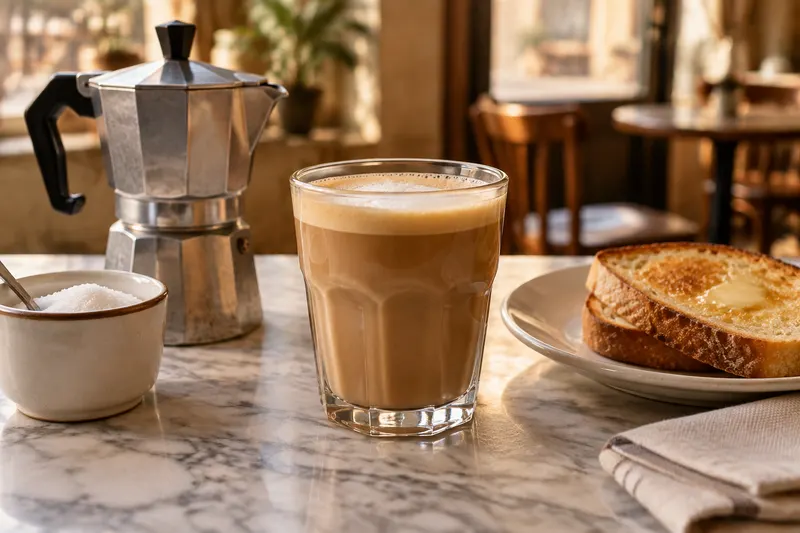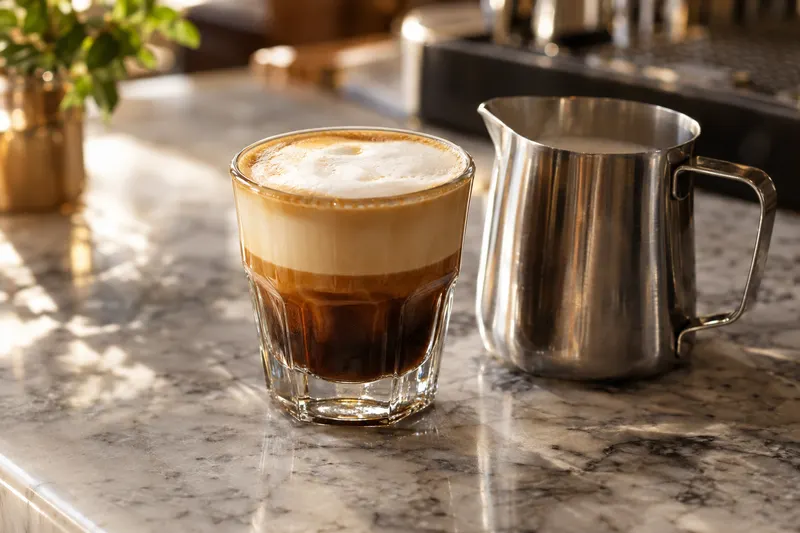
If you have spotted a small glass of coffee on a cafe menu and wondered what is a cortado, the short answer is simple: it is espresso cut with about the same amount of warm milk. It is smaller than a latte, softer than a straight shot, and it has quietly become a favorite in specialty coffee shops. The name, the glass and the balance of milk to coffee all say something about how it is meant to taste.
This guide covers what goes into a cortado, where it comes from, how it compares with a flat white, a latte, a cappuccino and a macchiato, and how to make one at home without special equipment beyond a way to brew strong coffee.
What is a cortado?
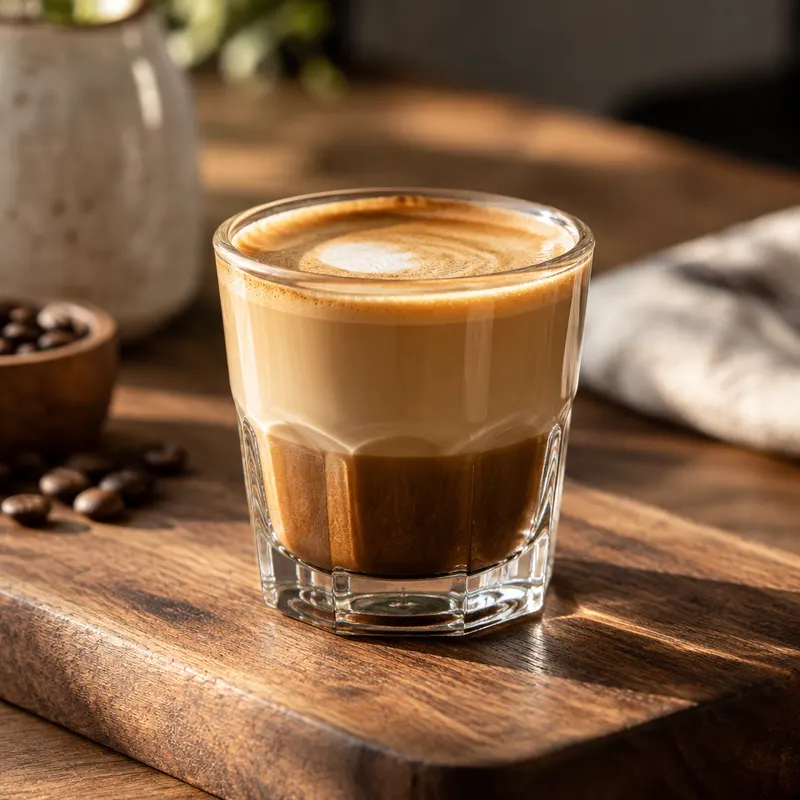
A cortado is a short espresso drink made with equal parts espresso and warm milk, with little to no foam on top. The milk is there to round off the espresso, not to bury it. You still taste the coffee first, but the sharp, acidic edge of the shot is softened.
Most cafes build it on a double shot and add roughly the same amount of lightly steamed milk. The finished drink is small, often served in a short glass, and it is usually gone in a few sips. Because the milk is only warmed and barely textured, the drink looks smooth and caramel-brown rather than white and foamy.
If you want one line to remember the answer to what is a cortado, it is this: half espresso, half warm milk, no froth to hide behind.
What is a Spanish coffee cortado?
The word comes from the Spanish verb cortar, which means “to cut.” A café cortado is espresso that has been cut with milk. Spain is where the drink took its name, and it is still an everyday order there, often in the afternoon or after a meal. The exact origin story is not well documented, so it is fair to say the drink grew out of Spanish cafe habits rather than a single inventor.
The cortado is also popular in Portugal and across Latin America, where small, strong coffee is part of daily life. Some places have their own cousins: in Cuba and Miami, a cortadito is usually made with sweetened espresso, and some cafes add a little sugar to a cortado on request. In recent years the drink has spread to specialty coffee shops in cities around the world, where it is often a favorite of people who like the taste of espresso but want it a touch gentler.
What does a cortado taste like?
A cortado tastes like espresso with the corners sanded off. The first impression is still roasted and rich, sometimes chocolatey or nutty depending on the beans, and the warm milk adds a mild sweetness and a rounder body. Bitterness and acidity are softer than in a straight shot, but the coffee stays front and center.
Texture matters here. Because the milk in a cortado is only lightly steamed, the drink feels smooth and silky rather than airy. There is no thick cap of foam and no big layer of milk to dig through. That is a big part of the appeal: every sip tastes of both coffee and milk at once.
Bean choice changes the cup more than you might expect in such a small drink. Medium and medium-dark roasts tend to give a classic, chocolatey cortado coffee. Lighter roasts can taste brighter and fruitier once the milk takes off the edge.
Cortado vs flat white, latte, cappuccino and macchiato
The cortado sits in a crowded family of espresso and milk drinks, and the names are easy to mix up. The main differences are the amount of milk and how much foam it carries. Exact sizes vary by cafe, so read this table as a typical guide, not a rule.
| Drink | Espresso to milk | Foam | Typical size |
|---|---|---|---|
| Macchiato | Mostly espresso, a spot of milk or foam | A small dab | The smallest cup |
| Cortado | About equal parts | Little to none | Small glass |
| Flat white | More milk than espresso | Thin, silky microfoam | Small to medium cup |
| Cappuccino | More milk, plenty of foam | A thick foam cap | Medium cup |
| Latte | Mostly milk | A thin layer | The largest cup |
Does a cortado or a flat white have more milk?
A flat white has more milk. The cortado vs flat white difference is mostly balance and texture. A cortado keeps espresso and milk close to even, and the milk is barely foamed. A flat white uses more milk, steamed into a fine, glossy microfoam, so it tastes creamier and a little milder. Both are small and coffee-forward compared with a latte. Our guide to what a flat white is explains the microfoam side in detail.
Cortado vs latte
The cortado vs latte comparison is about scale. A latte is a long, mostly milk drink with a thin layer of foam, so the coffee flavor is gentle and the cup is large. A cortado uses far less milk, so the espresso stays bold. If a latte tastes too milky to you, a cortado may be the swap you are looking for. See what a latte is for the milky end of the scale.
Cortado vs cappuccino
In a cortado vs cappuccino comparison, foam is the giveaway. A cappuccino has a thick, airy cap of foam on top of the milk, while a cortado has almost none. The cappuccino is also usually larger. Our cappuccino vs latte guide shows how foam changes the drink.
What is the difference between a macchiato and a cortado?
A macchiato is espresso “marked” with just a small spot of milk or foam, so it is mostly coffee. A cortado adds much more milk, about as much milk as espresso. The cortado vs macchiato choice comes down to how much you want the milk to show. One more catch: at some large chains, a drink called a macchiato is a big, sweet milk drink, which is very different from the traditional one. Our macchiato guide covers both versions.
Cortado vs Gibraltar coffee
In parts of the United States you may see a Gibraltar coffee on the menu. It is essentially a cortado served in a Gibraltar glass, a short, heavy tumbler made by Libbey that holds about 4.5 ounces. The name is usually traced to the specialty coffee scene in San Francisco, where baristas served a small espresso and milk drink in these glasses. Some cafes make their Gibraltar slightly hotter or with a little more texture in the milk, but in most places the two names point to the same idea. If you order either one, you can expect a small glass with roughly equal parts espresso and warm milk.
Is a cortado served hot or cold?
Traditionally, a cortado is served hot, or rather warm. The milk is heated but not scalded, so the drink is ready to sip straight away. That gentle temperature is part of what keeps the milk sweet and the texture smooth.
That said, an iced cortado has become a common order in warmer months. It is usually espresso and cold milk in roughly the same amounts, poured over a few ice cubes. Because the drink is so small, the ice can dilute it quickly, so some cafes use fewer cubes or a slightly stronger shot. If you see an iced cortado on a menu, expect a short, bold, milky drink, not a tall iced latte.
How to make a cortado at home
Learning how to make a cortado at home is mostly about two things: a strong, concentrated coffee base and milk that is warm but barely foamed. You do not need much else.
- Brew the espresso. Pull a double shot, about 40 to 60 ml. An espresso machine gives the closest result. Without one, a moka pot or an AeroPress can make a strong base that works well.
- Warm the milk. Heat about the same amount of milk to roughly 55 to 65 °C, warm to the touch but not steaming hard. A steam wand works best; on the stove, warm it gently in a small pan and whisk for a few seconds.
- Keep the foam low. You want a smooth, slightly thickened milk, not a cap of froth. If foam forms, hold it back with a spoon as you pour.
- Combine and serve. Pour the milk into the espresso in a small glass or cup and serve right away.
Whole milk tends to give the creamiest result, but oat milk and other plant milks can work too; barista versions usually heat and pour more smoothly. If the drink tastes too sharp, add a little more milk next time. If it tastes flat, try a fresher bean or a slightly smaller pour of milk. The best cortado coffee at home often takes a few tries to dial in, which is half the fun.
How to order a cortado
You only need a few words:
- Size: a cortado is small by design, so there is usually only one size.
- Hot or iced: warm is the classic; an iced cortado is the warm-weather version.
- Milk: whole milk is common, and many cafes can make it with oat or another plant milk.
- Sugar: served unsweetened unless you ask, though in Spain a sugar packet often comes on the side.
A plain “cortado, please” works almost anywhere that serves espresso. So the next time someone asks you what is a cortado, you can tell them it is espresso and warm milk in about equal parts, served small. Our Coffee Atlas shows where the cortado sits among the other espresso drinks, and the Americano guide covers the black option on the same menu.
Sources
- Espressolab. What Is a Cortado? How to Make a Cortado Coffee at Home.
- Colipse Coffee. What Is a Cortado? Types and How to Make It.
- Cozymeal. What Is a Cortado?
- FreshGround Roasting. Know Your Coffee Drinks: What is a Cortado?