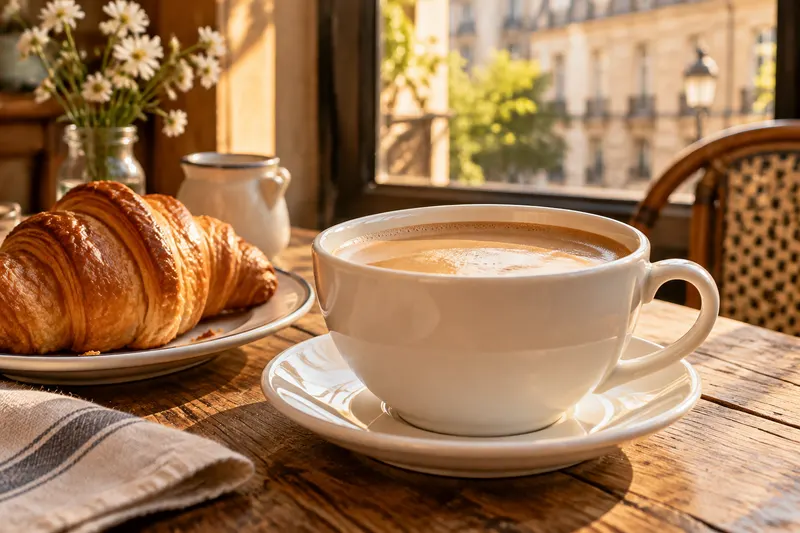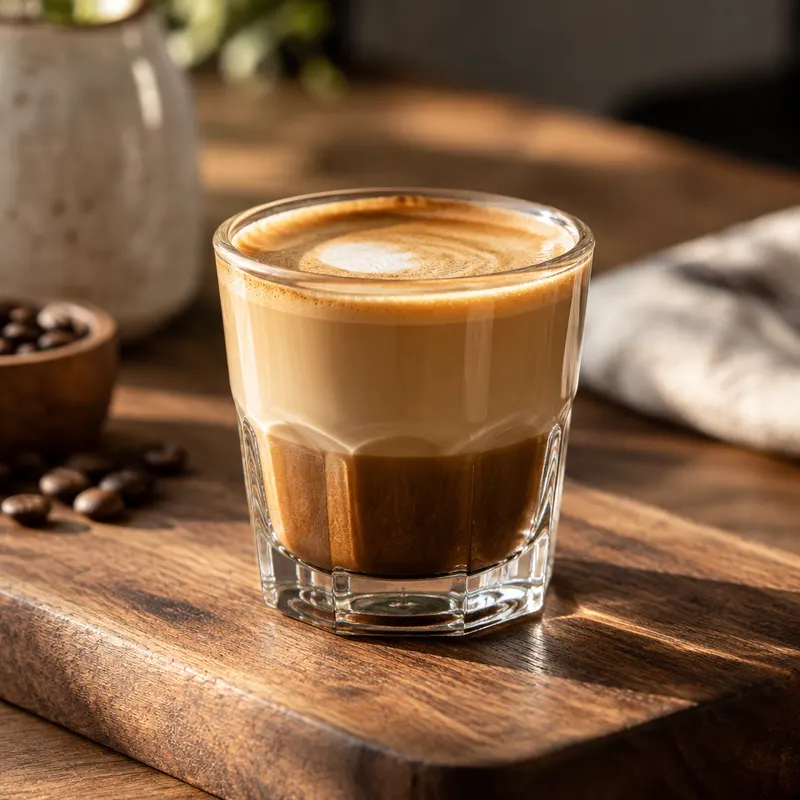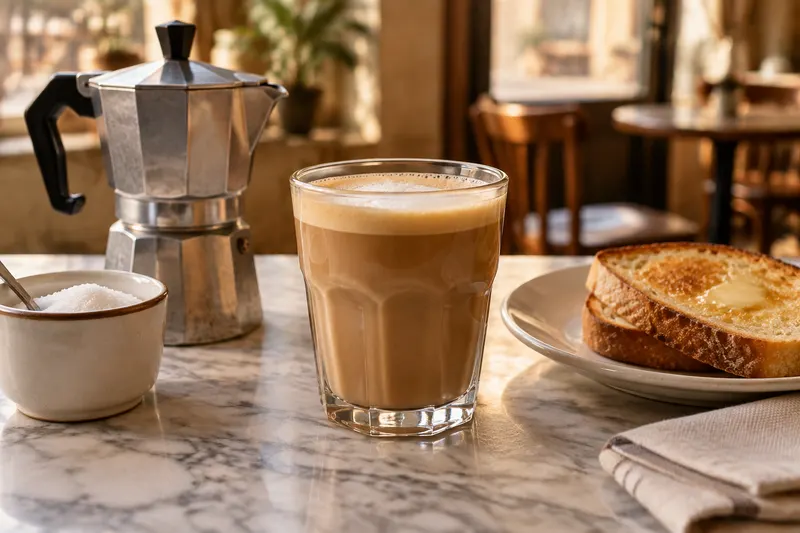
If you have seen it on a menu in Miami, Madrid or your local bakery and wondered what is cafe con leche, here is the short version: it is strong coffee, often espresso, mixed with about the same amount of very hot milk. The name is Spanish for “coffee with milk.”
This guide explains what goes into the drink, how Spain, Cuba and Puerto Rico make it, how it compares with a latte, a cortado and a cafe au lait, and how to make one at home with a moka pot. (In Spanish it is written café con leche; we leave out the accent here, as most American menus do.)
What is cafe con leche?
Wikipedia describes it as strong coffee, usually espresso, mixed with scalded milk in roughly equal amounts. Scalded milk is milk heated until it steams and small bubbles appear at the edge, just below a boil. It is common throughout Spain and Latin America, and it is very similar to the Italian caffè latte and the French cafe au lait.
Two details make it its own drink. First, the coffee is strong: espresso in Spanish cafes, and at home most often coffee from a stovetop moka pot. Second, the milk is hot and plentiful, but it is not built into a tall cap of foam. Coffeeness calls it a 50-50 mix of dark roast espresso and hot, scalded milk with very little foam.
So if someone asks you what is cafe con leche in one line: strong coffee and hot milk, half and half, sugar to taste.
What is the English version of cafe con leche?
In plain English it is simply coffee with milk; that is the whole cafe con leche meaning. The closest drinks on an American menu are a latte (espresso with more milk) and a cafe au lait (brewed coffee with hot milk). There is no separate English name for it.
Where it comes from: Spain, Cuba and Puerto Rico
Cafe con leche came from Spain, though Wikipedia notes that its exact origin is unclear. It spread to other Spanish-speaking countries and to Latin American communities around the world. It is often considered a breakfast drink, and because of all the milk it is heavier and more filling than black coffee.
The style shifts from place to place:
- Spain. Espresso with hot milk, sugar optional, served in a cup or a glass. You can ask for a lighter or darker cup.
- Cuba and Miami. Wikipedia notes that Cuban and Puerto Rican places often make it with sugar. A Cuban cafe con leche, as Community Goods and Cafe Bustelo describe it, starts by whipping sugar with the first drops of coffee into a pale, sweet foam called espuma. It is often served with buttered Cuban toast for dunking.
- Puerto Rico. 787 Coffee, a Puerto Rican roaster, describes equal parts strong coffee and steamed whole milk, with cinnamon or sugar as optional extras, and suggests a medium roast.
How to order it in Spanish
Wikipedia lists a few useful words. Clarito or manchado means lighter, with more milk; oscurito means darker, with less milk. Ordered “yo lo preparo,” you get the espresso and the steamed milk separately and mix them yourself, which A Sassy Spoon says is common in Cuban restaurants in South Florida.
How do the recipes compare?
There is no single official recipe. Here is what the sources actually use:
| Source | Style | Coffee | Milk | Sugar |
|---|---|---|---|---|
| Wikipedia | Spain and Latin America | Strong coffee, usually espresso | Scalded, about equal amount | To taste |
| Coffeeness | Spanish | Dark roast espresso or moka pot | Scalded, little foam, 50-50 | Optional |
| Bare Feet in the Kitchen | Spanish, at home | 3-cup moka pot | 2/3 cup, warmed and frothed | 1 to 3 teaspoons |
| Cafe Bustelo | Cuban, serves 4 | 1/3 cup ground coffee, 1 1/4 cups water, moka pot | 3 cups whole milk, hot, frothed | 1/4 to 1/3 cup, whipped |
| Community Goods | Cuban (Miami) | Moka pot | Scalded whole milk, roughly equal | Whipped into espuma |
| 787 Coffee | Puerto Rican | Strong coffee, medium roast | Steamed whole milk, equal parts | Optional, or cinnamon |
The pattern: about one part strong coffee to one part hot milk, whole milk by default, and sugar from none to a sweet foam.
Is cafe con leche sweet?
It may or may not be. In Spain, Coffeeness says sugar is optional. In Cuban and Puerto Rican cafes it often comes sweetened, and the Cuban espuma makes it noticeably sweet. Order it without sugar if you prefer it plain.
Cafe con leche vs latte and other milk coffees
Is a cafe con leche the same as a latte?
No, though they are close cousins. A latte is espresso with a lot of steamed milk and a thin layer of silky foam; Community Goods puts it at about 1 part espresso to 3 parts milk. A cafe con leche is closer to 1 to 1, with scalded milk and little foam, and it is often sweetened. That is the cafe con leche vs latte difference in short: more coffee, less foam, more sugar.
Is a flat white the same as cafe con leche?
No. A flat white is a small, strong milk coffee, usually with a double shot and silky microfoam, from the Australian and New Zealand cafe scene. A cafe con leche is a larger breakfast cup of strong coffee and hot milk in about equal parts, with little foam.
Cafe con leche vs cortado
A cortado is a small drink of espresso with about equal warm milk, often served in a glass. The ratio is similar, but the cortado is much smaller. Coffeeness notes that some Spanish cafes even serve a “cafe con leche cortado” with less milk.
Cafe con leche vs cafe au lait
A cafe au lait is the French version: brewed coffee (drip, French press or pour-over) with about equal hot milk. A cafe con leche is typically built on espresso or moka pot coffee, so it tastes darker and stronger.
How to make cafe con leche at home
You do not need an espresso machine. A moka pot is the traditional home brewer in the sources above, and strong French press coffee or an espresso shot also works (Community Goods).
- Brew strong coffee. Fill a small moka pot and heat it over medium heat. Bare Feet in the Kitchen notes that a 3-cup pot makes about 6 ounces of coffee, enough for 1 large or 2 small cups.
- Optional: whip the sugar. For the Cuban style, put 1 to 3 teaspoons of sugar in a cup. When the first drops of coffee come out, pour a splash onto the sugar (Cafe Bustelo uses about half a tablespoon, Community Goods about a tablespoon) and beat it for about 1 to 2 minutes until it turns into a pale, creamy paste.
- Scald the milk. Heat about 2/3 cup of whole milk in a small pan over medium heat until it steams and small bubbles form at the edge, just below a boil. A microwave works too: Bare Feet in the Kitchen warms it for about 90 seconds.
- Combine. Stir the rest of the coffee into the sugar paste, then pour in the hot milk in roughly equal parts.
That is a basic cafe con leche recipe. For more on heating and frothing milk without a machine, see how to make a latte at home.
Iced cafe con leche and other twists
For an iced cafe con leche, Community Goods chills the sweetened coffee, pours it over ice and tops it with cold milk. The same source mentions a Tampa (Ybor City) version with a pinch of salt and sweetened condensed milk in place of sugar, which comes close to Vietnamese iced coffee. Whole milk is the usual choice, and Wikipedia notes that other dairy and plant milks change the taste and texture.
The bottom line
So what is cafe con leche? It is strong coffee, often espresso or moka pot coffee, with about the same amount of hot, scalded milk, and as much sugar as the local style calls for. It sits between a cortado and a latte, and it is easy to make at home. To see how it fits among other milk drinks, browse the types of coffee drinks or the Coffee Atlas.
Sources
- Wikipedia. Café con leche.
- Arne Preuss, Coffeeness. What Is a Cafe Con Leche? A Spanish National Treasure.
- Café Bustelo. Café con Leche (recipe).
- Community Goods. Cafe Con Leche Recipe: How to Make It at Home.
- Mary Younkin, Bare Feet in the Kitchen. Cafe con Leche.
- A Sassy Spoon. Cafe Con Leche with Cuban Toast.
- Brandon Pena, 787 Coffee. What is a Cafe con Leche.