Fika is the Swedish coffee break, but Swedes would tell you it is a little more than that. It usually means a cup of freshly brewed coffee, something sweet, and a few unhurried minutes with other people. Below you will find the fika meaning, where the word comes from, when Swedes take the break, what goes on the plate, how it compares with hygge and lagom, and how to have one at home.
What is fika?
The Swedish Institute’s glossary on sweden.se defines it as a “coffee break (including the socialising that goes with it)”. Another sweden.se article says the word has no real translation and describes it as a pause with colleagues or friends over coffee and, usually, something sweet to eat.
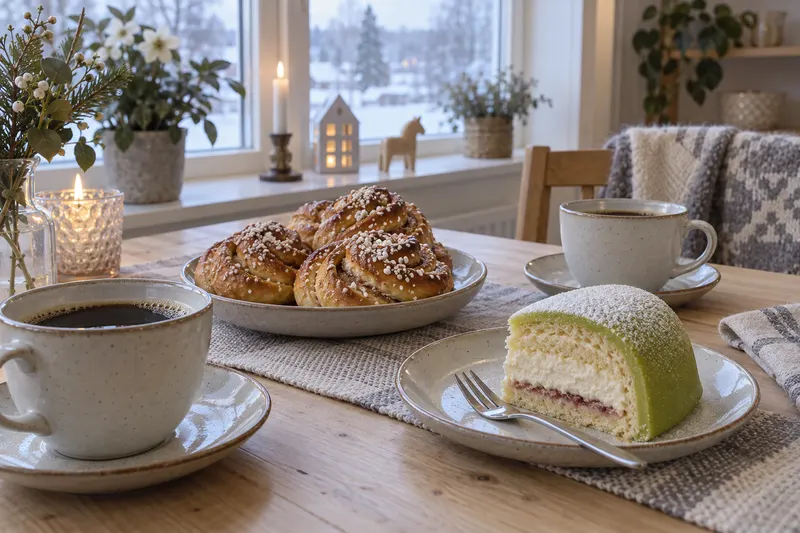
The word is both a noun and a verb. You can “ta en fika” (have one) or use the word as a verb when you meet a friend, and Visit Sweden notes that everyone in the country understands exactly what you mean. In practice it often looks like this:
- A drink. Usually coffee, often strong filter coffee. Tea or another warm drink is fine too.
- Something baked. Swedes call it fikabröd, the bread that goes with the break: buns, cake, cookies or a slice of bread with butter and cheese.
- Company. Colleagues, friends, family or a date. A quiet pause on your own can count, but it is mostly seen as a social ritual.
- A real pause. You sit down, take your time and step away from work or screens for a while.
Is fika just a coffee break?
Not quite. Visit Sweden describes it as a moment to pause, connect and recharge, and says it is often more about the company and conversation than the coffee itself. ScandiKitchen puts it as more than a coffee break, but less than something formal. It is casual, it happens every day, and it is about stopping for a moment rather than refueling at your desk.
How do you pronounce fika?
Say “FEE-ka”, with the stress on the first syllable (ScandiKitchen, Inside the Travel Lab).
Where the word comes from
The meaning goes back to the word for coffee itself. Visit Sweden says the word is believed to be a reversal of the syllables in “kaffi”, the old spelling of coffee (today it is “kaffe”). At first the coffee alone was the point. Over time the baked goods became just as important, along with the social side, and the arrival of patisseries in the 19th century helped turn it into the coffee-and-cake habit Swedes know today. Some writers call the exact origin uncertain, so read the syllable swap as the most common explanation rather than a settled fact.
When do Swedes take the break?
What time is Swedish fika?
There is no fixed time. Visit Sweden says it can happen at any time of day. At work, many teams have a set rhythm: Visit Sweden notes that some workplaces have two breaks, one mid-morning and one in the afternoon. ScandiKitchen, written by a Scandinavian cook, gives typical times of around 9:30 in the morning and around 2:30 in the afternoon. On weekends the pause moves to cafés and to friends’ kitchens, and an evening version at home is called kvällsfika.
At the office it is a real habit. Sweden.se says that at some workplaces the break is spontaneous and at others it is a daily tradition, sometimes with colleagues taking turns to bake for the group. Visit Sweden’s guide to cinnamon buns adds that many newcomers are skeptical at first, then admit that good ideas often come up over coffee. A fika Sweden-style happens at home, at work, in cafés and even outdoors, with a thermos on a hike or a ski trip.
What is fika coffee?
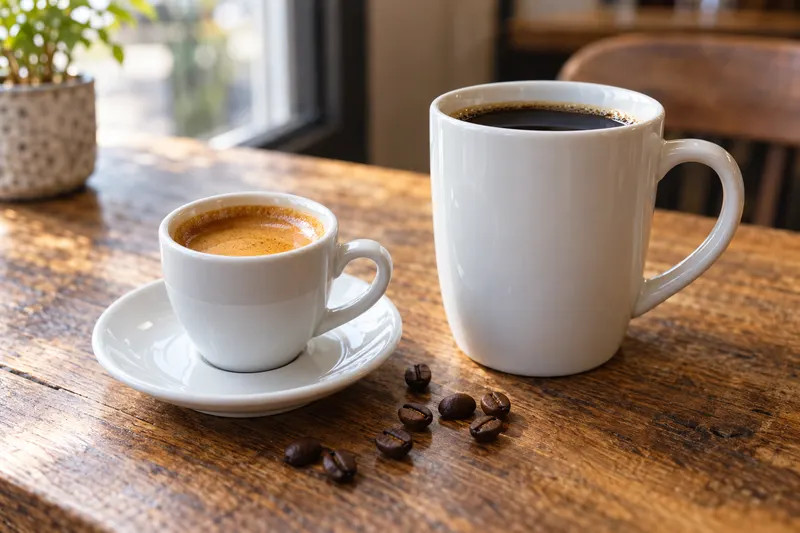
It is usually plain brewed coffee rather than a fancy espresso drink. ScandiKitchen describes strong filter coffee in big mugs, with a pot left on the table at home. Your host may offer a “påtår”, which sweden.se translates as a refill of coffee, often included. If you want to brew Swedish coffee at home, a drip machine, a French press or a moka pot all work. For the difference between brewed coffee and espresso, see espresso vs coffee.
What do Swedes eat with their coffee?
The sweet side matters. Visit Sweden lists five classics, and the cinnamon bun is the most famous of them.
| Bake | Swedish name | What it is |
|---|---|---|
| Cinnamon buns | kanelbullar (one is a kanelbulle) | Spiral yeast buns with cinnamon, sugar and butter, topped with pearl sugar |
| Cardamom buns | kardemummabullar | A cousin of the cinnamon roll, flavored with cardamom |
| Princess cake | prinsesstårta | A dome of sponge, vanilla cream, raspberry jam and whipped cream under green marzipan |
| Chocolate balls | chokladbollar | A no-bake mix of oats, butter, cocoa, coffee and sugar, rolled in coconut or pearl sugar |
| Sticky chocolate cake | kladdkaka | A dense, gooey chocolate cake, often served with whipped cream |
| Seven kinds of cookies | sju sorters kakor | A tray of small cookies, a coffee-party tradition since the late 19th century |
| Semla | semla (plural semlor) | A cardamom bun filled with almond paste and whipped cream, eaten before Lent |
Swedish cinnamon buns and Kanelbullens dag
Kanelbullar are the classic choice. According to Visit Sweden, the bun was first created after the First World War but only became popular in the 1950s, when the ingredients became easier to get. In 1999 a group of Swedish baking-ingredient producers named October 4 Cinnamon Bun Day (Kanelbullens dag), and Swedes still mark it with buns and coffee. Savory options such as a cheese sandwich also appear, especially at home, but sweet bakes dominate (Life in Norway).
Hygge, lagom and the Swedish way of pausing
What is the difference between hygge and fika?
Hygge is a Danish word for a cozy, comfortable mood, and writers often compare the two (Inside the Travel Lab). The difference is that hygge describes a feeling or atmosphere, while the Swedish habit is a specific thing you do: you stop, have coffee and something to eat, and talk. Lagom is another Swedish word, which sweden.se translates as “just right; not too little, not too much”. Life in Norway links the two Swedish ideas: a short, regular pause fits the lagom balance between work and rest.
| Word | Language | What it means |
|---|---|---|
| Fika | Swedish | A pause for coffee, something sweet and company |
| Lagom | Swedish | Just right, not too little and not too much |
| Hygge | Danish | A cozy, contented atmosphere or mood |
How to do it at home
There are no strict rules, but Visit Sweden’s guidelines are a good start:
- Brew a pot. Make enough coffee for everyone to have a second cup. Tea is welcome too.
- Bake or buy something sweet. Cinnamon buns are classic, but a simple cake, cookies or chocolate balls are just as traditional. If you are invited to someone’s home, bring a cake or pastries.
- Sit down. ScandiKitchen notes that you cannot really take a fika break standing up.
- Do not rush. Slow down and take a real pause, at the kitchen table, in a café or outdoors.
- Put the phone away. The point is the company and the moment.
Want more coffee traditions from around the world? Read how to brew Turkish coffee in a cezve, learn what Arabic coffee is, or browse the types of coffee drinks and the Coffee Atlas.
Sources
- Visit Sweden. Fika like a Swede: what Swedish fika is and 5 classic treats to try (updated September 2026).
- Visit Sweden. Cinnamon buns and where to get the best ones.
- Sweden.se (Swedish Institute). Swedish glossary.
- Sweden.se (Swedish Institute). Work culture in Sweden: what to expect.
- Sweden.se (Swedish Institute). The semla: a Swedish delicacy.
- ScandiKitchen (Bronte Aurell). What is Fika? The art of taking a lot of delicious breaks.
- Inside the Travel Lab (Abigail King). What is Fika? The Meaning of Fika in Sweden and How to Bring it Home.
- Life in Norway (David Nikel). Swedish Fika: How Swedes do Coffee Breaks.