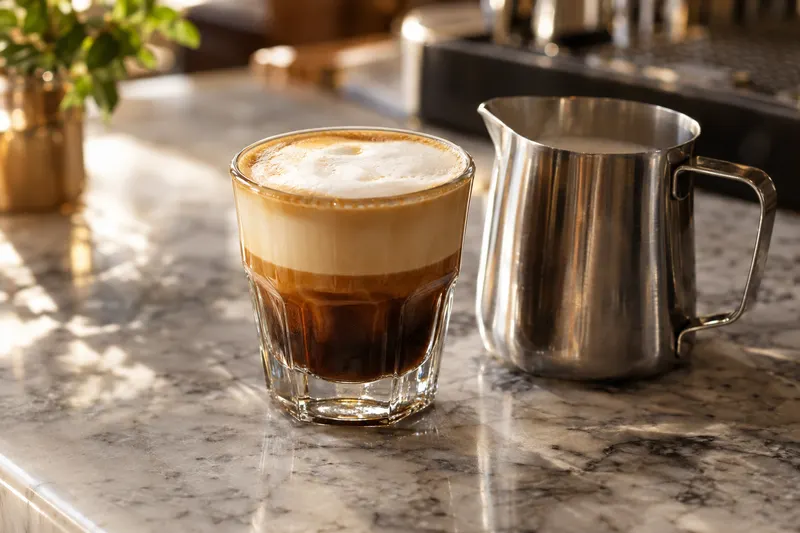
If you have ever stood at a cafe counter and wondered what is a cappuccino, beyond “the foamy one,” the answer is short: it is espresso with steamed milk and a thick cap of milk foam. That foam is the whole personality of the drink. It makes a cappuccino feel lighter than a latte, look taller than a flat white, and taste more of coffee than most milk drinks on the menu.
This guide covers what goes into a cappuccino, where the name comes from, how it tastes, how it compares with a latte, a flat white and a macchiato, what wet and dry mean, and how to make one at home.
What is a cappuccino?
A cappuccino is an espresso drink topped with hot milk and a deep layer of foam. Traditional recipes describe roughly equal parts espresso, milk and foam, so the cup looks like it is wearing a white hat. Many modern specialty cafes serve a smaller, slightly wetter version, with a little more milk and a thinner but still clear cap of foam.
Whatever the house style, three things stay the same. There is espresso at the bottom, warm milk in the middle, and enough foam on top that you notice it on your lip with the first sip. If the foam is barely there, you are probably drinking something closer to a latte or a flat white.
So when someone asks what is a cappuccino, the one-line answer is this: espresso, warm milk and a generous cap of foam, in a medium cup.
What is a cappuccino made of?
Only two ingredients go into a classic cappuccino coffee: espresso and milk. The trick is that the milk is used in two textures. Part of it is heated until it is hot and silky, and part of it is stretched with air into a light, airy froth. The barista pours the steamed milk into the espresso and lets the foam settle on top.
Some cafes dust the top with cocoa or cinnamon, and a few mix cocoa into the espresso before the milk goes in, as Hips Social describes doing in its cafe. Sugar and flavored syrups are optional extras, not part of the classic recipe.
Where does the name cappuccino come from?
The usual story goes back to the Capuchin friars, a Catholic order known for its brown, hooded habits. In Italian, cappuccio means hood, and the color of the drink, espresso lightened with milk, was said to resemble the friars’ robes.
According to Baba Java Coffee, the name arrived by way of Vienna, where coffee houses served a drink called the Kapuziner, a coffee lightened with cream that took its name from the same brown color. The drink we now call a cappuccino took shape in Italy once espresso machines spread and baristas could steam and foam milk. Like many coffee stories, the details are not fully documented, so it is fair to say the name grew out of the color, not a single inventor.
What does a cappuccino taste like?
A cappuccino tastes like espresso softened by milk, with a light, airy texture on top. The first sip goes through the foam, which feels soft and almost sweet. Under it, the warm milk rounds off the bitterness of the espresso, but the coffee is still clear and roasty, sometimes chocolatey or nutty depending on the beans.
Because there is less liquid milk than in a latte, the coffee flavor is easier to find. Because there is more foam than in a flat white, the drink feels lighter in the mouth, even if the cup is a similar size. Many people sprinkle cocoa on top, which plays nicely with darker roasts.
Is a cappuccino stronger than a latte?
In flavor, usually yes. A cappuccino and a latte often start from the same espresso, but the latte adds much more hot milk, so the coffee taste is diluted further. The cappuccino keeps more of its volume as foam, which means less liquid milk between you and the espresso. It tastes bolder, even though the cup may look just as big.
Cappuccino vs latte, flat white and macchiato
The cappuccino sits in the middle of the espresso and milk family. The main differences are how much milk there is and how much of it is foam. Sizes vary by cafe, so read this table as a typical guide, not a rule.
| Drink | Espresso to milk | Foam | Typical size |
|---|---|---|---|
| Macchiato | Mostly espresso, a spot of milk or foam | A small dab | The smallest cup |
| Cortado | About equal parts | Little to none | Small glass |
| Flat white | More milk than espresso | Thin, silky microfoam | Small to medium cup |
| Cappuccino | Espresso, milk and foam in balance | A thick foam cap | Medium cup |
| Latte | Mostly milk | A thin layer | The largest cup |
How it compares with a latte
The cappuccino vs latte difference comes down to milk and foam. A latte is mostly steamed milk with a thin layer of foam, so it tastes mild and creamy. A cappuccino has less milk and a much thicker cap of foam, so it tastes stronger and feels lighter. Our full comparison with the latte goes through it side by side, and what is a latte covers the milky end of the scale.
Cappuccino vs flat white
In a cappuccino vs flat white comparison, texture is the giveaway. A flat white uses milk steamed into a fine, glossy microfoam with almost no visible foam layer, and it is usually smaller and built on a double shot. A cappuccino has a taller, airier cap of foam. Our guide to what a flat white is explains the microfoam side.
Cappuccino vs macchiato
The cappuccino vs macchiato choice is about how much milk you want. A traditional macchiato is espresso “marked” with just a spot of milk or foam, so it is mostly coffee. A cappuccino adds a full layer of warm milk and foam. At some large chains a “macchiato” is a big, sweet milk drink, which is a different thing again. Our macchiato guide covers both versions.
What is the difference between a wet and dry cappuccino?
A wet cappuccino has more steamed milk and less foam. It is creamier and closer to a small latte. A dry cappuccino has less liquid milk and more foam, so it is lighter, airier and tastes more of espresso. A very dry one is sometimes called “bone dry,” which means almost all foam over the shot.
If you like the coffee flavor to stand out, ask for it dry. If you want something smoother and milkier, ask for it wet. Most cafes will make either without fuss.
Is there an iced cappuccino?
Yes, an iced cappuccino is a common summer order, but it is not quite the same drink. Hot foam does not hold up well on ice, so cafes usually pour espresso and cold milk over ice and finish it with a layer of cold foam, milk whipped cold until it is thick. The result is lighter and foamier than an iced latte, with the same espresso base.
At home, you can make a simple version by frothing cold milk in a jar or with a handheld frother and spooning it over espresso and milk on ice.
How to make a cappuccino at home
Learning how to make a cappuccino is mostly about the milk. You need a strong coffee base and milk that is both steamed and foamed.
- Brew the espresso. Pull a single or double shot, about 30 to 60 ml, into a cup that holds roughly 150 to 180 ml. Without a machine, a moka pot or an AeroPress can make a strong base that works well.
- Heat the milk. Use about 100 to 120 ml of cold milk and heat it to roughly 55 to 65 °C, hot to the touch but not boiling.
- Make the foam. With a steam wand, keep the tip near the surface at first to let air in, then lower it to swirl the milk. Without one, pump the warm milk in a French press, shake it in a sealed jar, or use a handheld frother until it roughly doubles in volume.
- Pour and spoon. Pour the steamed milk into the espresso, holding back the foam with a spoon, then spoon a thick cap of foam on top.
What kind of milk is best for a cappuccino?
Whole milk is the classic choice, because its fat and protein make a stable, creamy foam. Reduced-fat milk often foams taller but feels thinner. Oat milk is the most popular plant option; barista versions are made to foam and pour more like dairy. Soy and almond milk can work too, though the foam may be less steady. Whatever you use, start with cold, fresh milk, which foams more easily.
How to order a cappuccino
A plain “cappuccino, please” works almost anywhere that serves espresso. A few words help you get the cup you like:
- Wet or dry: wet means more milk, dry means more foam.
- Milk: whole milk is standard, and many cafes offer oat or another plant milk.
- Topping: cocoa or cinnamon on top is common; just ask.
- Hot or iced: hot is the classic; iced usually comes with cold foam.
So the next time someone asks you what is a cappuccino, you can tell them it is espresso, hot milk and a cap of foam, with the foam doing most of the talking. Our Coffee Atlas shows where it sits among the other espresso drinks, and our guides to the cortado and the Americano cover the smaller and the black options on the same menu.
Sources
- Hips Social. What is a cappuccino? Everything you need to know about the iconic frothy coffee.
- Baba Java Coffee. Coffee Drink Origin Stories: The Cappuccino.
- Spoon University. What Is a Cappuccino? What to Know About This Drink.