Espresso is the small, dark shot behind almost every cafe menu, yet the word gets used for a bean, a roast, a machine and a drink. So what is espresso, really? It is a way of brewing: hot water pushed under high pressure through finely ground coffee, in well under a minute. The result is a short, thick, concentrated coffee with a layer of foam on top.
This guide covers what goes into a shot, where the name comes from, how espresso differs from regular coffee, what crema is, and how to drink it.
What is espresso?
Wikipedia describes espresso as a concentrated form of coffee made by forcing hot water under high pressure through finely ground coffee beans. A single serving is small, typically about 25 to 30 ml, with a dark body and a lighter foam on top called crema. It is also the base of most cafe drinks, from the latte to the Americano.
Espresso coffee is not a type of bean and not a single roast. Meraki puts it plainly: any fresh coffee can be brewed as espresso if the grind and the machine allow it. What makes it espresso is the method.
The Specialty Coffee Association (SCA) quotes the classic industry definition in its 25 Magazine. A shot is about 25 to 35 ml, made from about 7 to 9 g of coffee (14 to 18 g for a double), with water at about 195 to 205°F (90.5 to 96.1°C) forced through at about 9 to 10 atmospheres of pressure, ground so the shot runs in about 20 to 30 seconds. The same definition says espresso should be made for one person and served right away.
The Italian standard is a little smaller. The Istituto Espresso Italiano describes its Certified Italian Espresso as a cup of about 25 ml, and the parameters quoted by Mokaffee are about 7 g of coffee, water at about 88°C, about 9 bar of pressure and about 25 seconds of extraction.
Espresso meaning and where it comes from
The word is Italian. Wikipedia notes that some dictionaries translate it as pressed out, which fits the way pressure pushes the flavor out of the coffee, but the word also carries the sense of made expressly for you, and quickly. The espresso meaning, in short, covers both the method and the idea of a coffee made to order.
Expresso is a common misspelling of the same drink, as Meraki and Wikipedia both point out.
The machines came first. According to Wikipedia, Angelo Moriondo of Turin patented an early steam-driven coffee machine, Luigi Bezzera of Milan built one that brewed single servings, and Desiderio Pavoni bought Bezzera’s patents and sold what are generally held to be the first commercial espresso machines. Those early steam machines made a darker, harsher cup. The modern shot, with its foam, came later with Achille Gaggia’s lever machines, and Wikipedia says that this kind of coffee was first sold as crema caffè, cream coffee, because of the foam.
How is espresso made?
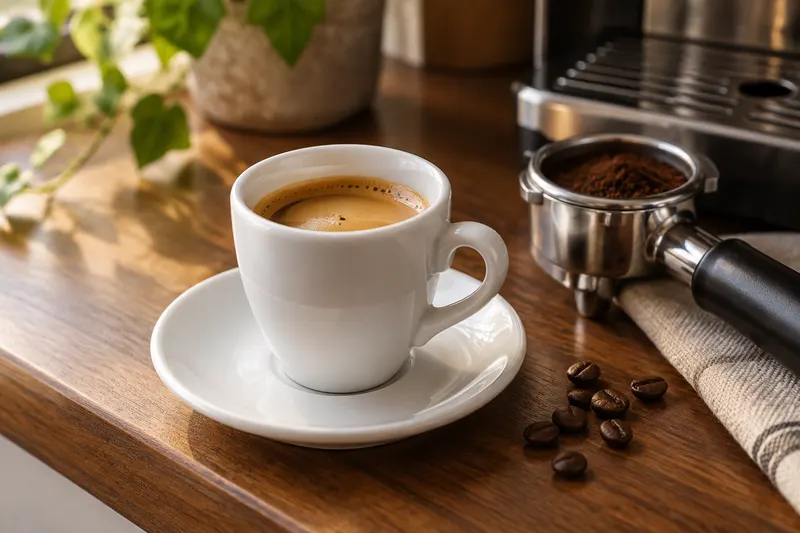
So how is espresso made, step by step? Finely ground coffee is packed into a portafilter basket and pressed level, a step called tamping. The portafilter locks into the machine, and the machine pushes hot water through the packed coffee under pressure. Wikipedia explains that tamping helps the water pass through evenly, which gives a thicker drink.
What a typical cafe shot looks like today has drifted from the classic definition. In the Barista Guild of America espresso survey reported by the SCA, the average shot started with about 18 to 20 g of coffee, gave about 36.5 g of espresso, ran for about 25 to 30 seconds at about 9 bars and about 200°F, often with pre-infusion. The average espresso ratio was about 1:2, for example 20 g in and 40 g out, and the answers ranged from about 1:1.5 to 1:2.5.
For home brewing, Meraki suggests a similar starting point: about 18 g of coffee to about 36 g of espresso in about 25 to 30 seconds. Change the grind first, then taste. The length of the shot changes the drink:
| Shot | Water for the same coffee | Taste |
|---|---|---|
| Ristretto | About half | Sweeter, thicker |
| Espresso | Standard, about 1:2 by weight | Balanced, intense |
| Lungo | More | Thinner, more bitter |
| Doppio | Double coffee, double water | Like a single, but more of it |
Espresso vs coffee: what is the difference?
Once you know what is espresso, the espresso vs coffee difference is easy to place: it is in the method, not the plant. The same beans can make both.
How is espresso different from regular coffee?
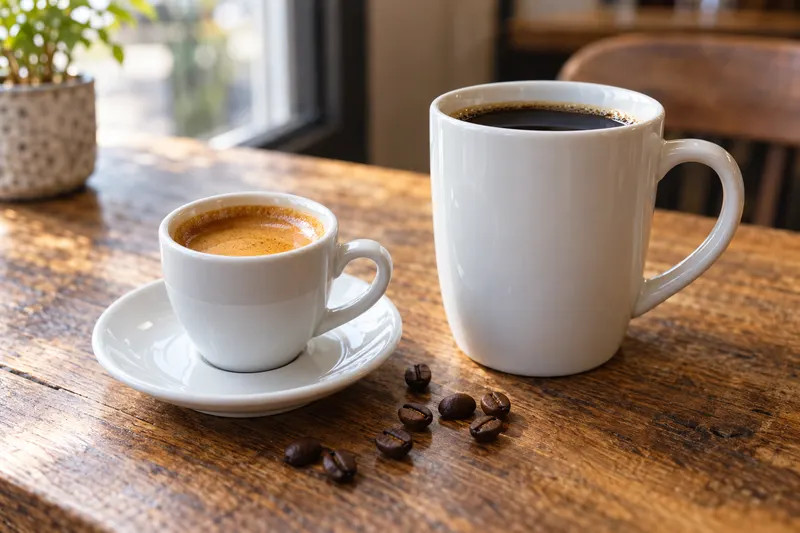
Regular drip or pour-over coffee uses a coarser grind, gravity and a few minutes of contact time. Espresso uses a fine grind, high pressure and tens of seconds, and it ends up as a much smaller drink (Meraki). Wikipedia adds that the pressure leaves espresso with more dissolved and suspended solids, which is why it feels thicker than drip coffee. A French press sits in between: a coarse grind, a few minutes of steeping and no pressure beyond the plunger. The full side-by-side is in espresso vs coffee.
Is espresso stronger than coffee?
Per sip, yes. Espresso is more concentrated, so each sip tastes more intense than a sip of drip coffee (Meraki, Wikipedia). By the cup it is a different comparison, because a mug of drip coffee is many times larger than a single shot. Caffeine content is a separate question that depends on the cup and the coffee, and we do not give a number for it in this guide.
Espresso beans vs coffee beans
There is no separate espresso bean. Wikipedia says that any bean or roast level can be used for real espresso, and calls the dark-roast rule a widespread myth. Roast taste does vary by region: Wikipedia notes a darker roast is more common in southern Italy and a lighter one farther north. An espresso roast label on a bag is the roaster’s suggestion, not a requirement.
Crema and taste
Crema is the part people photograph, and the part most often misunderstood.
What is crema?
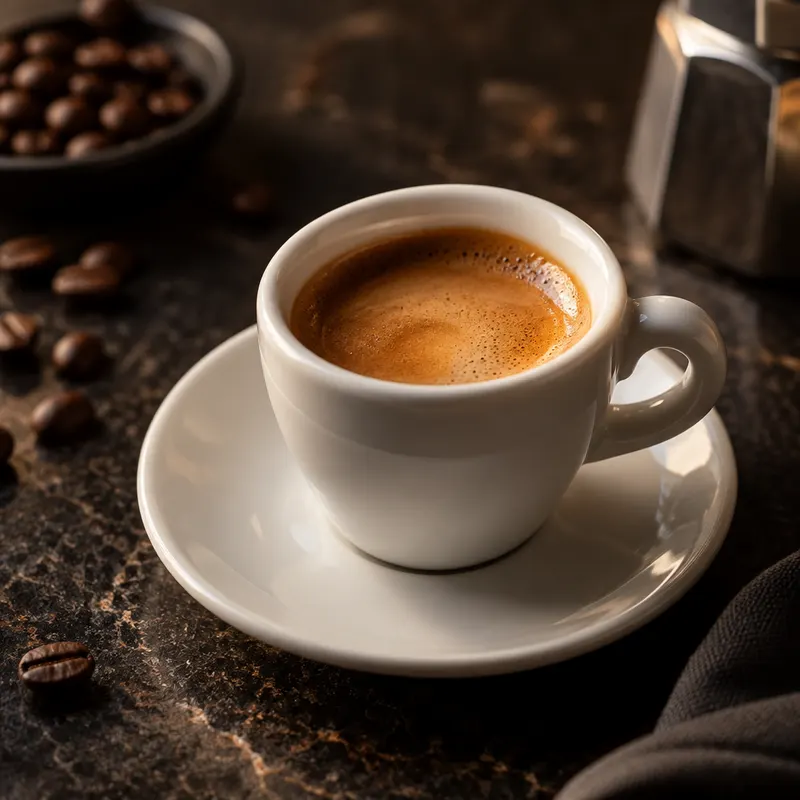
Crema is the golden-brown foam on top of a shot. Perfect Daily Grind, quoting coffee author James Hoffmann, explains that water under pressure dissolves more of the carbon dioxide left in the beans from roasting. When the liquid reaches normal pressure in the cup, the gas comes out as countless tiny bubbles that form a stable foam. Britta Folmer, also quoted there, says crema cannot form without pressure, which is why pour-over and batch-brewed coffee do not have it.
The espresso crema got its name early. Fixx Coffee says Achille Gaggia marketed it as natural cream, crema naturale, when his high-pressure machines first produced it.
A thick crema often points to fresh coffee, and stale beans tend to look flatter (Meraki). But Meraki also notes that darker roasts can show pretty crema while tasting baked, so read the foam as a clue and let the taste decide.
What does espresso taste like?
Good espresso tastes intense but balanced, with sweetness, acidity and bitterness in one short sip and a body that feels syrupy compared with drip coffee (Meraki). The Istituto Espresso Italiano describes its certified cup as round and velvety, with sour and bitter in balance, and an aroma of flowers, fruit, toasted bread and chocolate that can stay for some time after you swallow. A very sour shot often means it ran too fast, and a very bitter, dry one often means it ran too long.
How to drink espresso
There is no wrong way, but a few habits help. Espresso is usually served in a small, preheated cup called a demitasse (Espresso & Coffee Guide). Drink it soon after it is made, since the SCA definition says a shot should be served right away, and the crema fades within minutes. Smell it first, then take it in two or three sips. Some people stir the crema in, others sip through it; try both.
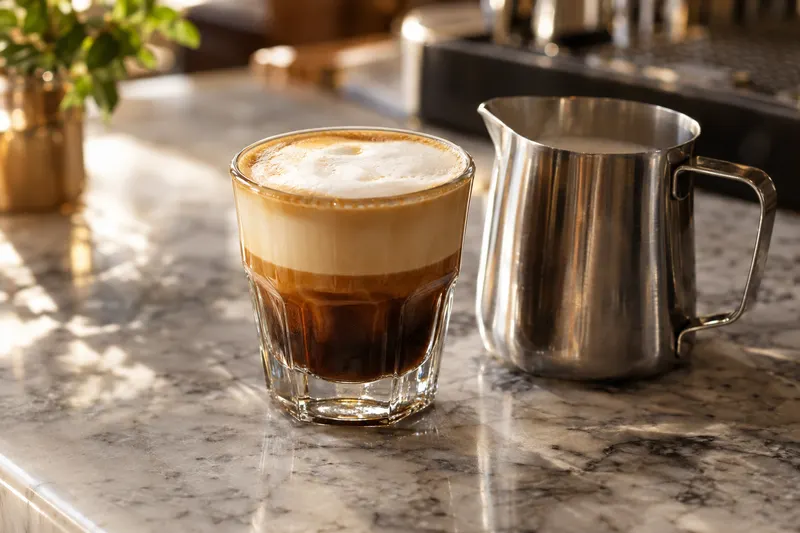
If straight espresso is too much, it is the base of many other drinks:
- With hot water: an Americano.
- With a little milk foam: a macchiato.
- With equal warm milk: a cortado.
- With steamed milk and foam: a cappuccino or a latte.
- Over ice cream: an affogato.
You can compare them side by side in our Coffee Atlas or in our guide to types of coffee drinks. To make the milk drinks without a cafe, see how to make a latte at home.
The short version
So what is espresso, in one line? It is a small, concentrated coffee brewed by forcing hot water under pressure through finely ground coffee, typically about 25 to 30 ml in about 25 to 30 seconds, topped with crema. It is a method, not a bean, and it sits under most cafe drinks.
To taste the difference yourself, order a single espresso shot straight, then a ristretto of the same coffee. Same beans, less water, and a noticeably different cup.
Sources
- Specialty Coffee Association. Defining the Ever-Changing Espresso (25 Magazine, Issue 3).
- Istituto Espresso Italiano. Certified Italian Espresso.
- Mokaffee. True Italian Espresso (the Istituto Nazionale Espresso Italiano parameters).
- Wikipedia. Espresso.
- Perfect Daily Grind. Crema: How It's Formed, What It Tells Us, & How to Learn From It.
- Meraki. What Is Espresso? Shot Basics, Crema, and Home Brewing.
- Fixx Coffee. Crema (glossary).
- Espresso & Coffee Guide. What is Espresso?